I haven’t had a good moan for a while on the blog, but when I do I do find it a rather cathartic experience, so I am going to have a long one now (I have handily put in a “Moan Over” break for those who want to skip past it).
I am generally very supportive of UK hospitality and it is fair to say their current struggles are predominantly due to being strangled by excessive red tape and taxes from successive governments who don’t know their elbows from their arses. One area where I do think the industry doesn’t, however, help themselves is wine mark ups.
The risk here is the creation of a doom loop. A not uncommon response to falling sales seems to be to increase the prices of booze in order to maintain the margin, with alot of wine lists now stating north of £30, which in turn further reduces demand and with it the margin and round and round we go again.
Whilst a high margin on wine looks great on paper, the old adage of a smaller margin on a lot is better than a bigger margin on very little/nothing seems to be potentially in play here. The market (in all things) usually has a ceiling price and with wine in restaurants I fear we are very close to it (or may have already reached/surpassed it). Add that to the general trend of people (the younguns particularly) drinking less (certainly when out) you have a double whammy in terms of suppressed demand.
There is, I think, in the UK a very real danger of a killing of the (wine margin) golden goose (with the dire consequences for the operating model as a whole that would bring about).
I have recently read a couple of articles on the subject of restaurant wine prices, with one bemoaning (rightly in my opinion) the sometimes eye watering level of mark ups now being applied to wine (with the internet making it very easy for people to look at the retail price to gauge value and an example given of a wine on a list in a London restaurant at £48 being available at a trade price of £6) and the other defending the standard 3+ times retail price mark ups.
Both arguments as set out had their merits, but the 3 x plus is fine argument seem to me to rely on 1) wine heavily cross subsidising food costs and 2) the need to cover costs that 90% of restaurants won’t have. The latter one included reference to training of staff re Burgundy crus and 1855 Bordeaux growth classification, with the “careful curated” (god I hate that word) list in question starting at post £30 and topping off at £120 (good luck with Burgundy crus and Bordeaux growths on that basis with 3+× mark ups and thus such training would seem somewhat unnecessary).
Now restaurants are absolutely entitled to make a return and a decent one at that, but wine seems to be expected to bear an awful lot of the heavy lifting margin wise and it is never wise to put your (margin) eggs (particularly such golden ones) all in one basket.
With mark ups increasingly well north of 3 x retail it is, perhaps, little wonder that:
- the old student tactic of loading up before going out has gone mainstream; and
- corkage is becoming a more and more popular (asked for) option.
My rather sad conclusion from those articles and from my own thoughts is that (bar from the lucky few with oodles of cash to burn who go to top end establishment with very fine lists) people are likely to increasingly shun wine lists in restaurants, with the huge loss of revenue (which comes with a nice margin) that that will entail. Once it is lost it ain’t coming back and where do restaurants get their margins from then? I very much doubt the current market will accept putting up food prices to the extent needed to compensate for a total collapse in wine revenues. As such, is it wise to continue to rely so heavily on high wine margins for profit purposes or would an alternative approach reap more dividends?
I do find it odd that pubs (seemingly) can’t make a survivable margin on booze and only make any profits via food sales and restaurants (seemingly) can’t make a survivable profit on food and are heavily reliant on booze sales to make one! There must be a happy medium position in there somewhere surely?
I do genuinely think wine margins need to be rethought and/or corkage considered much more widely. Before that though VAT has to be reduced for hospitality (as is the case in many European Countries) and then we can look at what is a realistic level of margin on wine which keeps the punters drinking and still allows a fair profit for the restaurants (need both).
I struggle with arguments that it can’t be done, when places in Spain seem to cope with much lower mark ups (probably on the basis that lower mark ups encourage people to buy better wine – it certainly does where I am concerned – with the bigger actual margin you get with people buying more premium wines). I actually generally spend more money on wine in Spanish restaurants (even though as a rule wine prices are a lot cheaper) than in UK ones due to the reasonable pricing always tempting me to move up the list quality wise.
This brings me to the Cardiff Wine Buyers Club. We all love to drink and chat about all things wine and go out on occasions to dinner, with the main aim being to drink good wine, eat good food and talk shxte (very much in that order).
The problem with this is if we bought off many a restaurant wine list the sort of wines we like to drink (if we could find them on a list, a lot of which in the UK are full of absolutely woeful, generic, slop) and chew the fat over we would become bankrupt rather quickly So the alternatives are cook at one of our homes (can’t be arsed) and crack open one of our better bottles or go to a place that does (reasonable) corkage and bring our own bottles.
Now to me the corkage option, subject to it being reasonable, is better all-round. The restaurant gets bums on seats and a margin on the food, plus in effect a free hit margin wise in terms of the wines brought (not much overheads to cover, bar from glasses they have in any event) and we get good food cooked for us and get to drink the wine of our choice without breaking the bank.
All to often I see restaurants simply ignore the corkage option or apply corkage on the basis of the return they would get on the cost of the average bottle off the list, but a lot of costs and all of the risk factored in to that list bottle price simply don’t apply with the corkage option. I mean if I don’t like the bottle I brought, with corkage the correct response is well that’s rather bad luck isn’t it (and by the way it’s still £[20]).
**************MOAN OVER**************
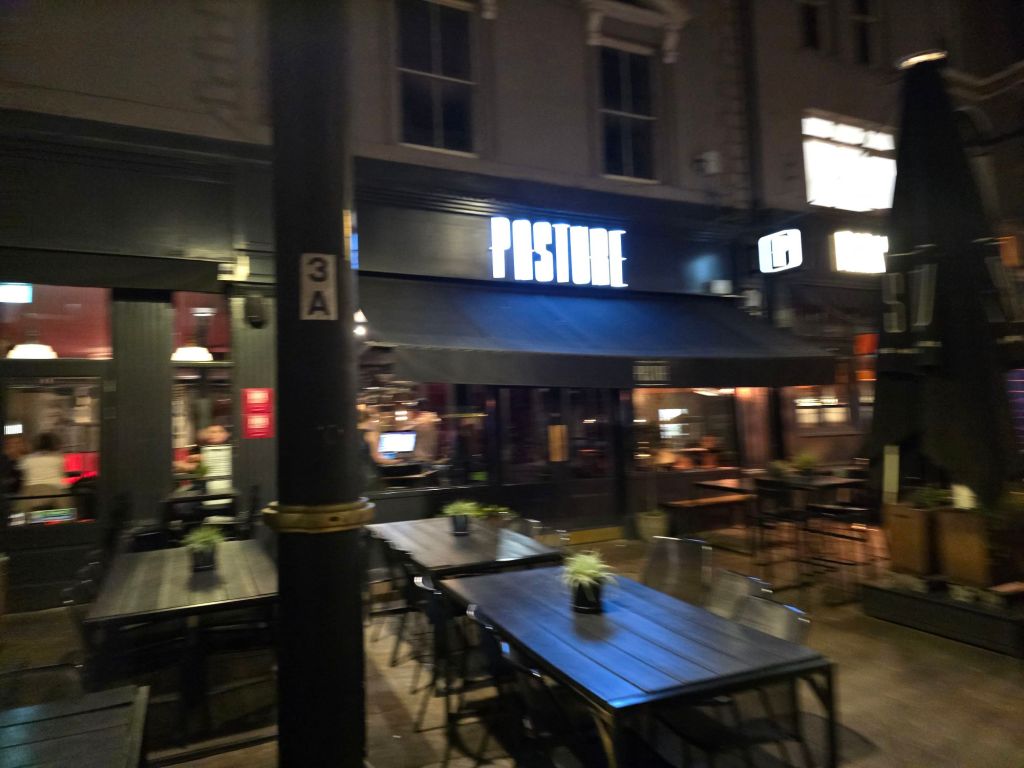
Our latest dinner was at Pasture, whose corkage offer is £20 a bottle. At that level it is one of the most reasonable (at the better end of dining) in Cardiff, but I do rather wish the Hawksmoor (£5 on Mondays corkage model).or 10 Greek Street (£5 during Friday lunchtime service) was more prevalent here. Good way to fill a place on an otherwise slow day, in the case of Mondays, I would have thought. Blacklock’s £10 every day would be even better, but I have no idea how they get that to work on the economics and I don’t want restaurants to go bust.
The menu operates on the basis of a tried and trusted formula of mostly red (predominately beef) meat.
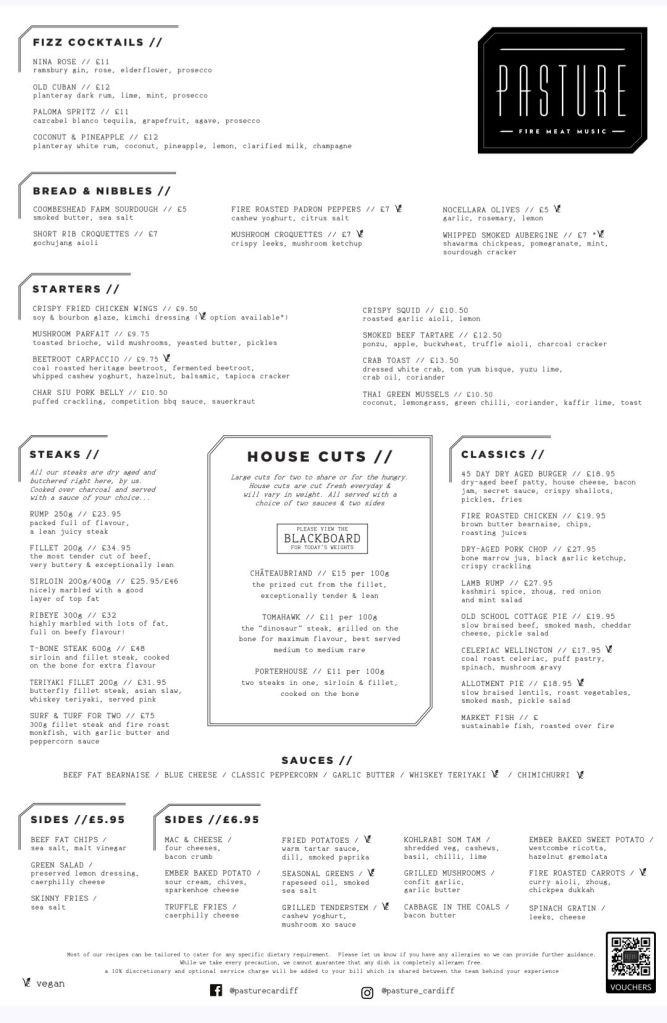
A combo of wine of our own choice (through corkage) and chargrilled red meat (good wine doesn’t need anything too complicated food wise) is a persuasive one indeed for the likes of me and booze wise the format for the Cardiff Wine Buyers Club remains a very simple one of “Bring something interesting (doesn’t have to be too pricey) that we can chew the fat over.” (we all really, and I mean, really love to talk about all things wine).
Based on that simple brief, what we collectively brought was indeed a rather interesting selection,
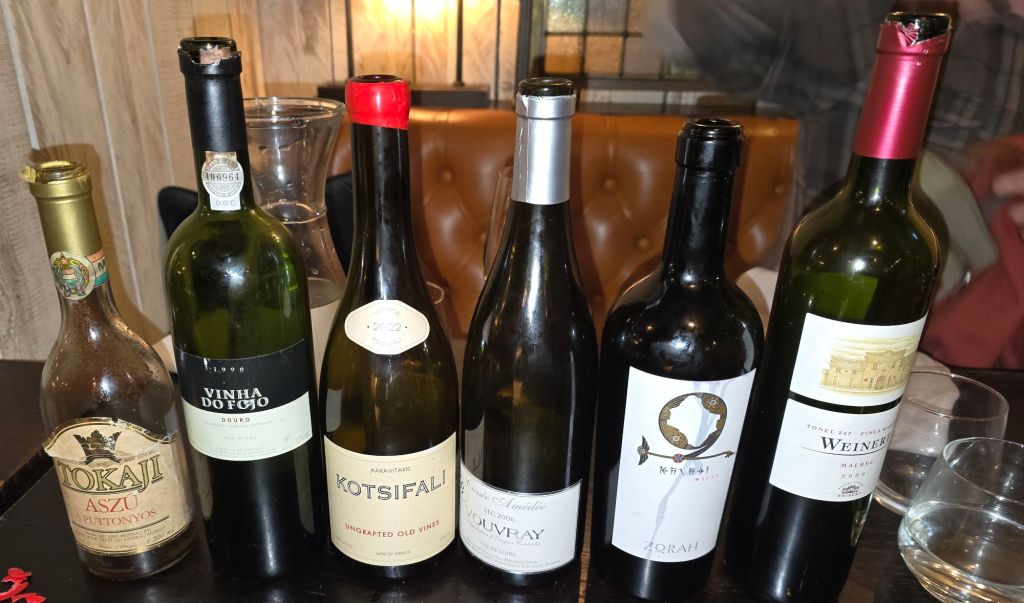
with a mix of French (white), Portuguese, Greek, Armenian, Argentinian (all reds) and Hungarian (the latter a sweetie).
We started off with the French number (a 2006 vouvray sec from the Loire Valley) as we perused the menu.
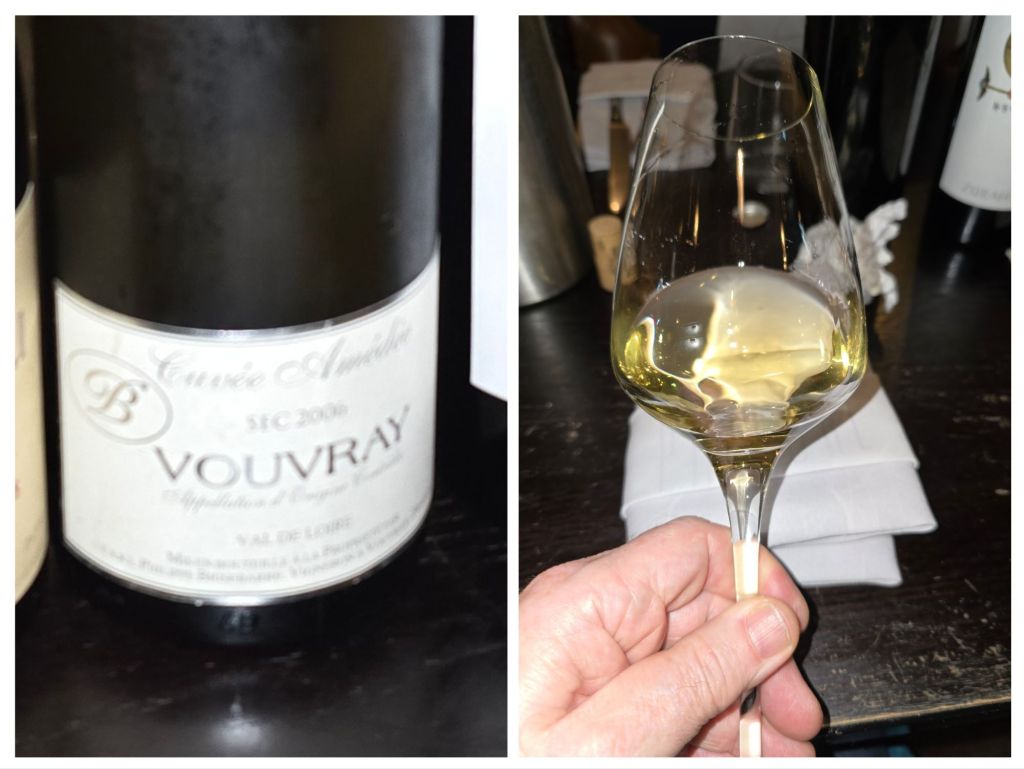
Lovely drop this, with a orchard fruits, citrus and spice on the nose. I got a pleasing salinity and minerality on the palate, as well as a touch of nutmeg. Happy to have some of this in the wine room.
Next up was an intriguing 2022 Cretan number made from the Kotsifali grape (no me neither)
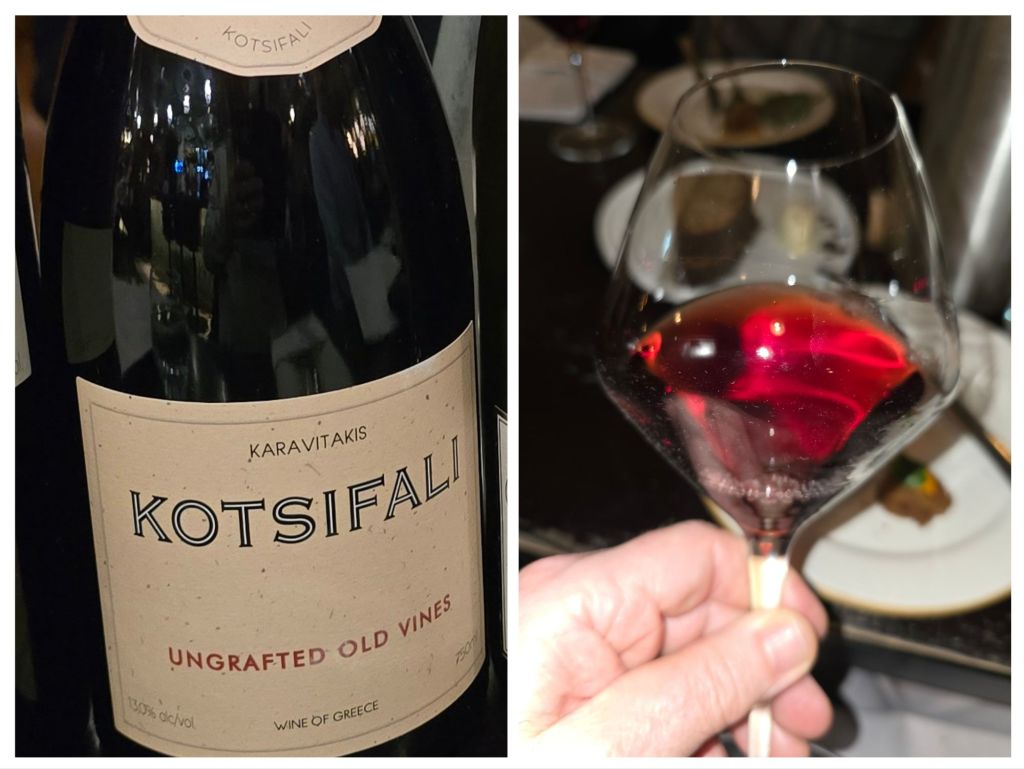
Very light colour to this wine, which had a touch of medicinal on the nose and crunchy red fruit on the palate. Some nice peppery notes too, that worked well with the food. Admirably fitted the “interesting” brief.
We drank this with various nibbles,
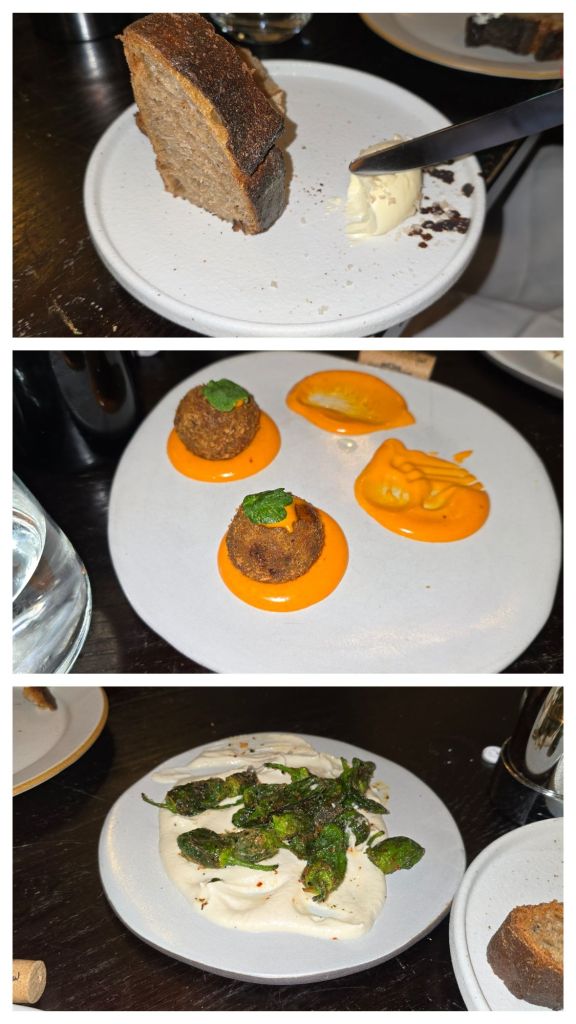
in the form of good bread with properly salty butter (simple, but very effective), their rather fine beef rib croquettes (with a nice blob of heat from the gochujan mayo) and some nicely blistered padrons. I tend to prefer padrons with just salt added, but I enjoyed these with a nice kick of citrus to the cashew yoghurt (can you call it that as no milk in mix, I wonder, following oat “milk” case?).
There was some debate as to which wine to drink next, so we decided to double up on the glasses and drink two together.
I had bought a venerable Douro (Portuguese) still red with 30 years on the clock
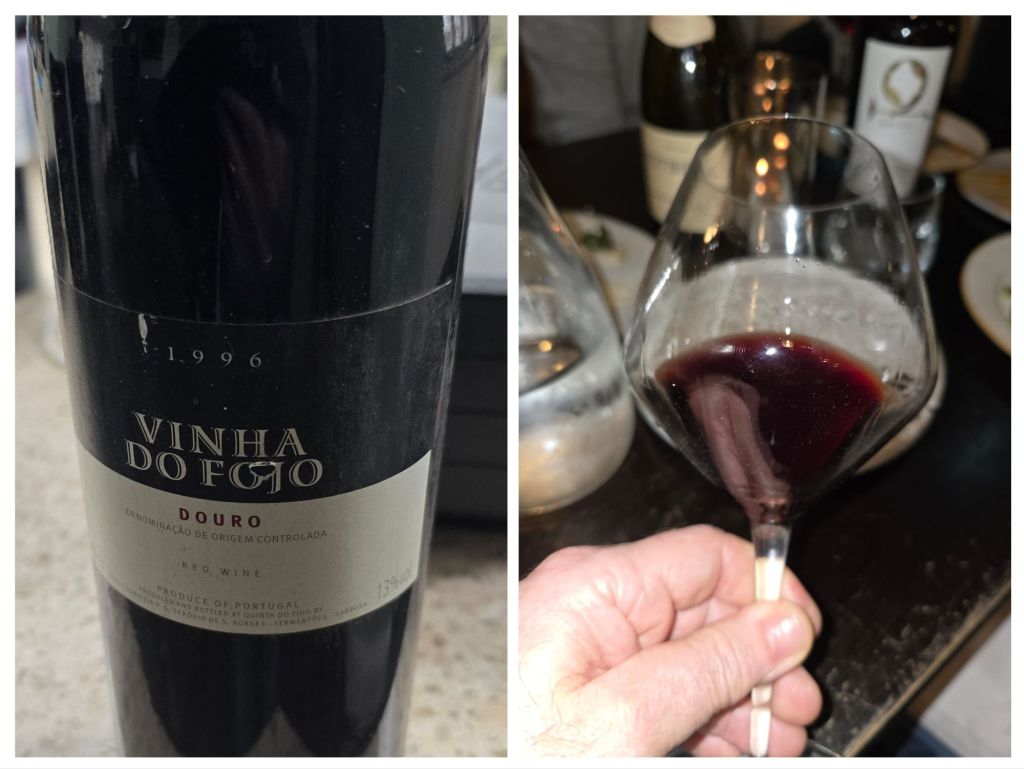
This was not showing it age at all in the glass, with rich red colour with little evidence of bricking on the rim.
Nice touch of dark fruits on the nose, with some tertiary earthy, leathery notes coming though. On the palate it had a lovely structure with nicely integrated tannins. Very elegant, one in our group likened it to a old claret with cedar in the mix. Nice touch of spice at the end too, with really good level of acidity.
Really well made wine this, with quite a few years still left in the tank. I bought a half case of it at auction a fair few years back (for a song) and it seems to be getting better and better as the years go by.
The other wine at this stage was a Armenian number (2022) from Zorah made from the indigenous areni noir grape (which some believe is the world’s oldest grape variety).
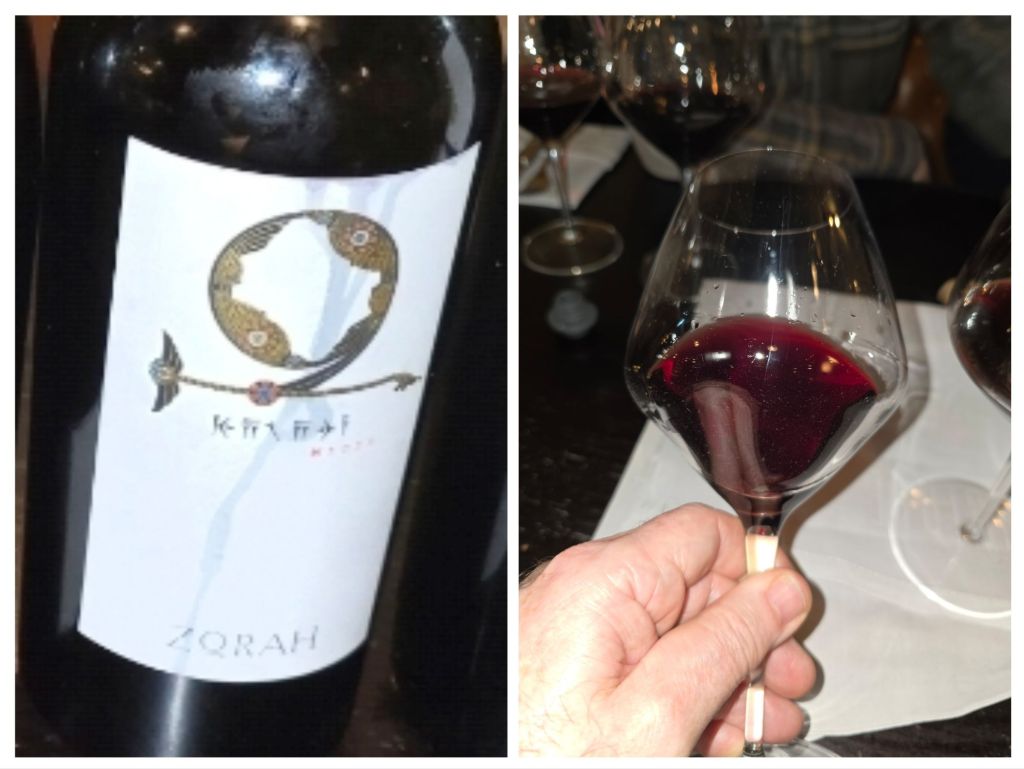
Pleasing floral and fruity notes on the nose, with plum and blackcurrant. On the palate it had a lot younger feel to it than the Fojo (unsurprising when it is but at baby as against it) with plenty of rich dark fruit and refreshing acidity. Nice wine, this with plenty of ageing potential.
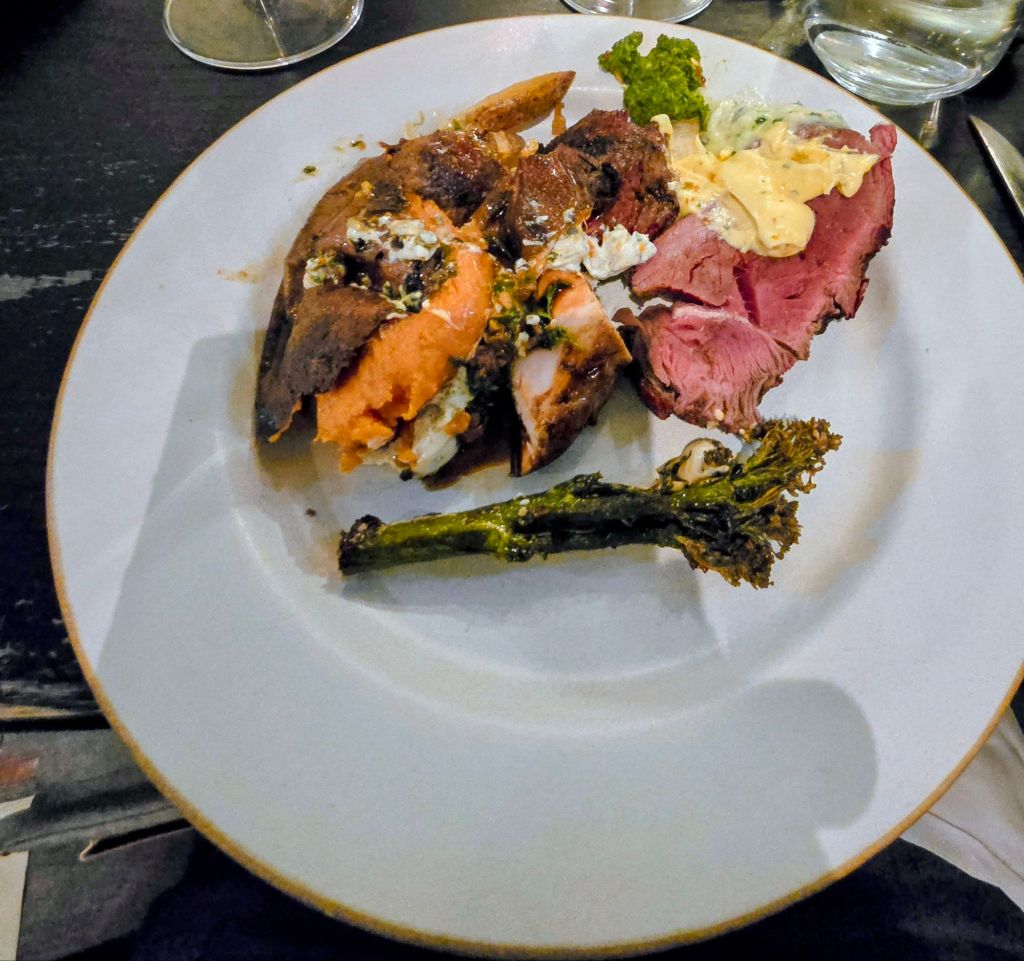
These were drunk with a mix of steaks (sirloin and chateaubriand) and various sides (beef fat chips, ember baked sweet potatoes, tenderstem broccoli and a spinach gratin).
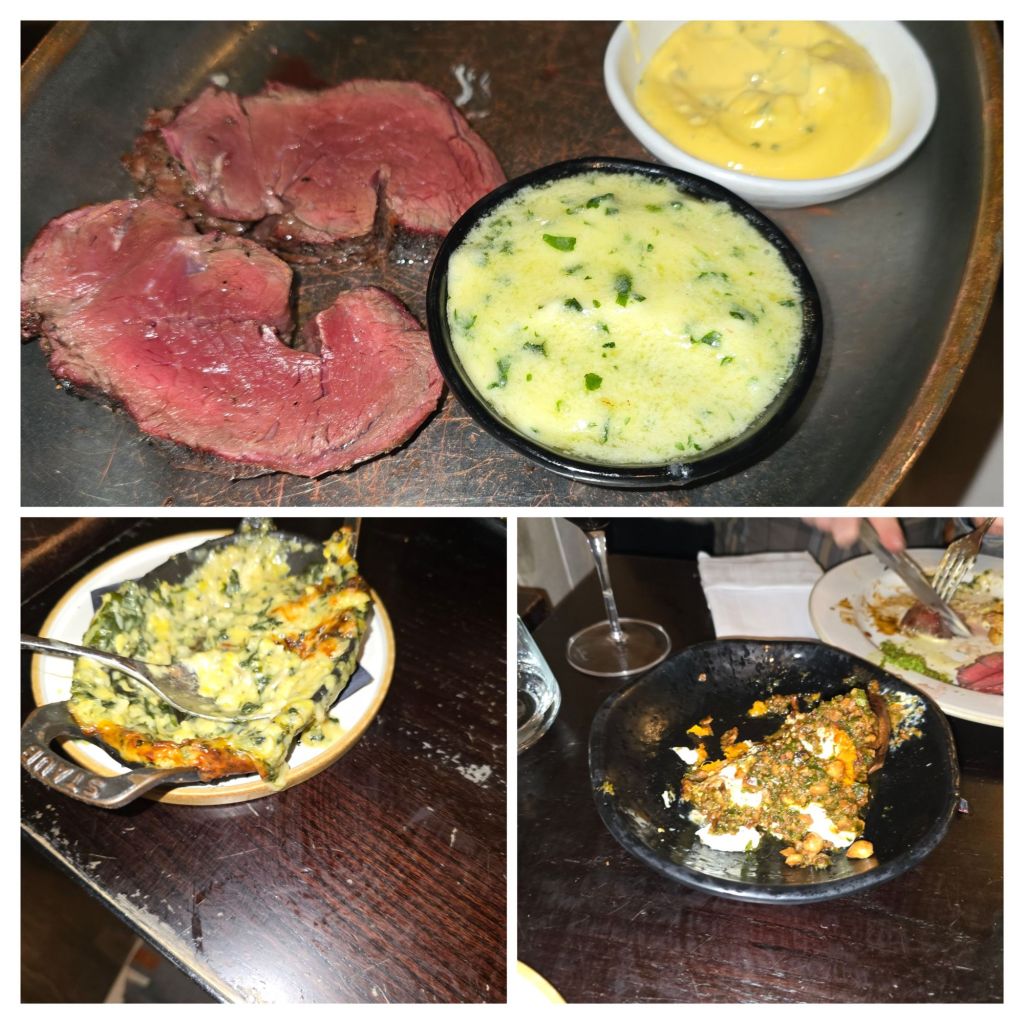
as well as chicken dish.
All made for a smorgasbord food wise which worked well enough with the diverse wines, although I would have preferred a bit more of a robust crust (from a fiercer sear) on the beef steaks.
The final red wine was a big old boy from Argentina
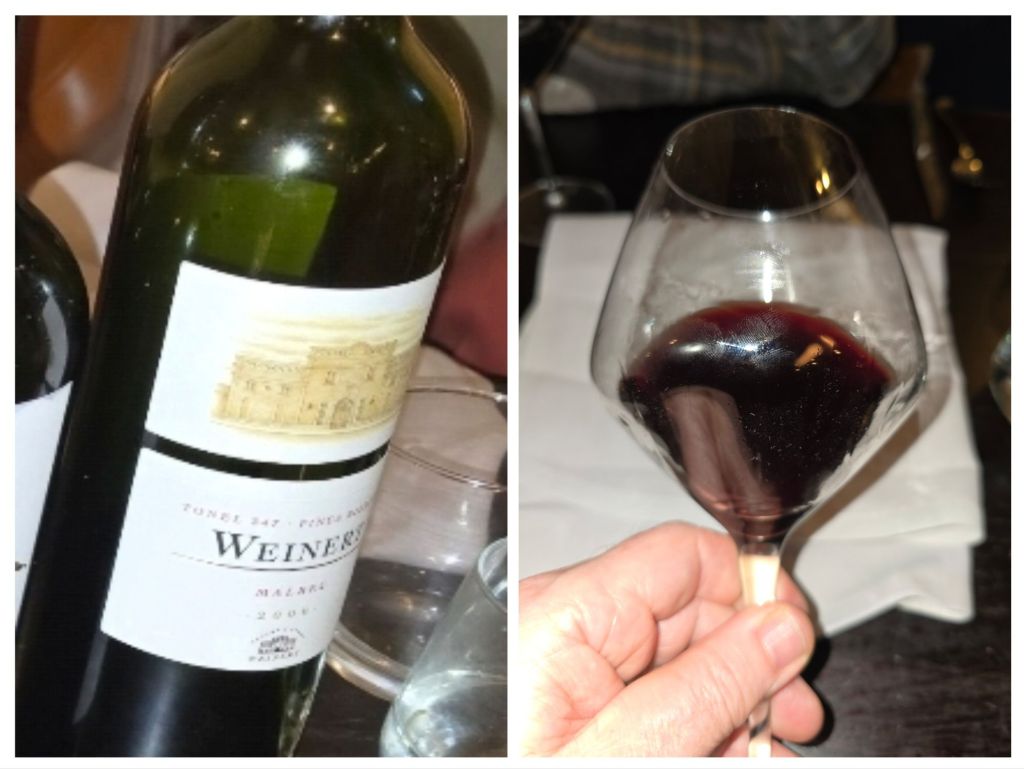
in the form of a Bodegas Weinert Tonel Unico No. 247 2006.
Big meaty nose and dense dark fruits on the palate, I think we erred a little in only opening it and getting it decanted in the restaurant. I believe it would have very much benefited from being opened and double decanted much earlier in the day, with the resultant greater expose to air undoubtedly allowing it to opening up a bit more than was evident on the night. As such we probably didn’t see it at its best
We skipped desserts and went for a dessert wine I bought of unknown age (found by my father years ago whilst clearing out a cellar, with the labels on some of the wines including this one having peeled away, and given to me gratis).
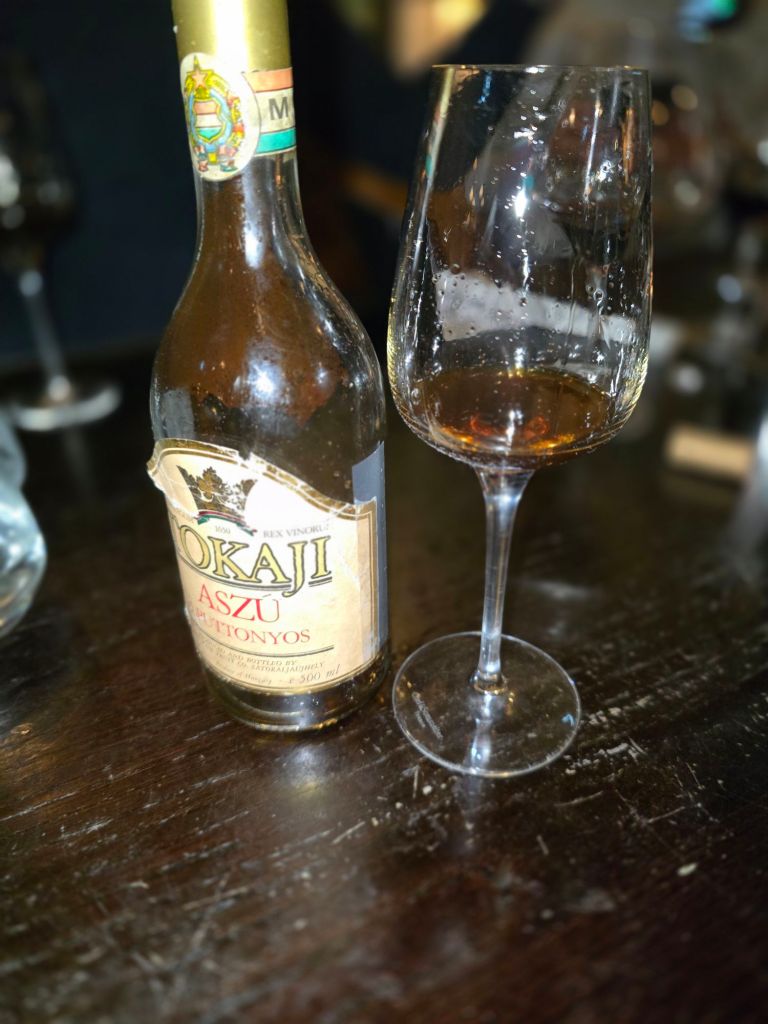
What a wine this was, with a lovely baked orange/marmalade and spice laden nose. On the palate there was the same gorgeous rich, sweet, orange maramalade, with a beautiful citrus (key lime) line of acidity that stopped it from being cloying and made it wonderfully refreshing for such a sweet wine. It stayed on the palate for an absolute age ( I swear I could still taste it the next morning).
We mused as to the age of this wine and all though there was some serious age to it. 1990s at least and quite possibly a lot earlier (70s/60s, even 50s) was the consensus but who knows as tokaji is pretty much immortal. I collect the stuff and if I die before I drink my stash (my dying wish will be one last sip of Royal Tokaji Essencia 1993), who ever inherits my remaining wine collection will have no fear as to whether they are still OK to drink (even if I live to 100, god forbid, to be honest the essencias will probably last until the end of time).
Verdict
The evening very much had a wine focus and we did ourselves proud with a rather fine selection of fascinating wines (to go with the food).
To me the tokaji was the wine of the night, followed by the Vinha do Fojo (granted I was slightly bias as they were the wines I bought to the party)
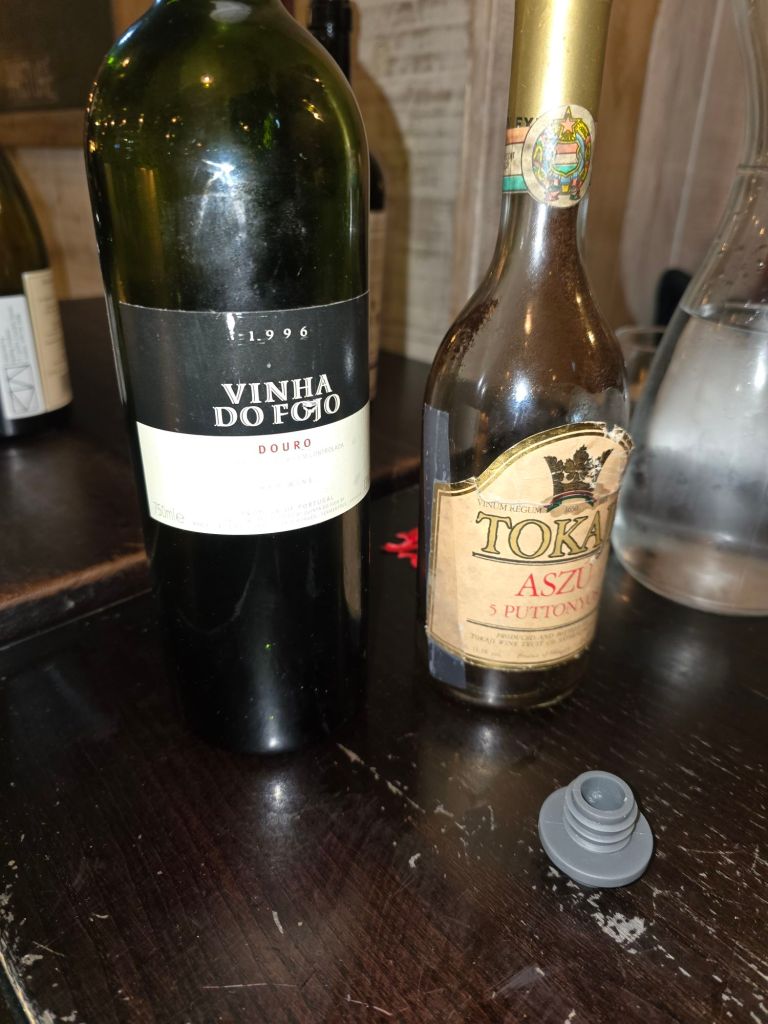
but all the wines were really good and we saved ourselves an absolute mint in taking advantage of Pasture’s corkage at £20 a pop. Buy those wines retail now would be several hundred pounds (at today’s prices) and imagine a standard restaurant mark up on top of that.
We spend £120 on corkage which is (I think) not a bad return for the restaurant for minimal investment and no risk.
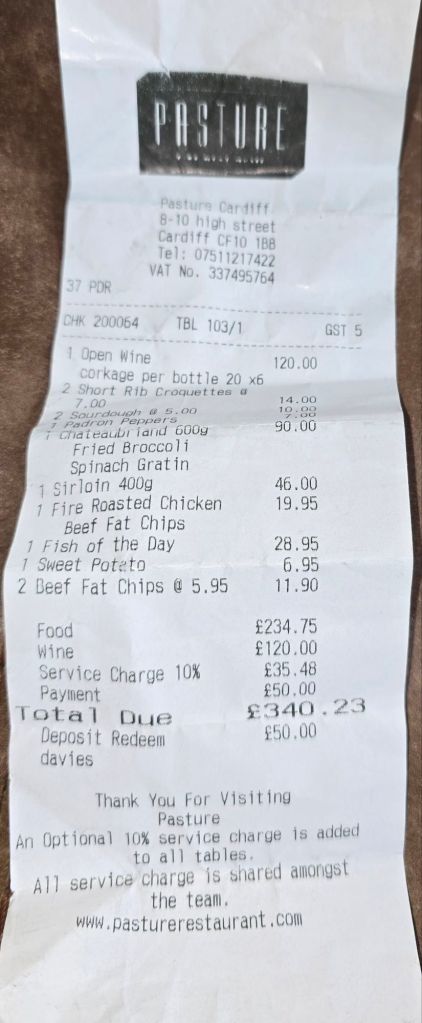
We also spent a fair bit on food and in toto I regard it all as a mutually rather beneficial arrangement for both parties.
I would add that the Pasture’s staff could not have been more helpful in terms of us bringing our own wine. They happily cooled stuff, provided glasses for each wine and decanting them when required. They were also genuinely interested in the wines and enjoyed tasting some of the wines when we offered (corkage etiquette suggests doing this, especially if an unusual wine). The tokaji particularly went down a storm.
If you want to celebrate something with one of your best bottle(s) of wine I can’t think of many places better to take that/those bottles to than Pasture.
I do feel that corkage will increasingly be called for by the public and restaurants ignore it at their peril.
I think a Hawksmoor- esque £5 Monday offer would go down a storm here in Cardiff. Asador 44 use to do it and I would very much welcome a return. Gaucho do free corkage on Mondays, but limit it to a ludicrous 1/2 a bottle per person!
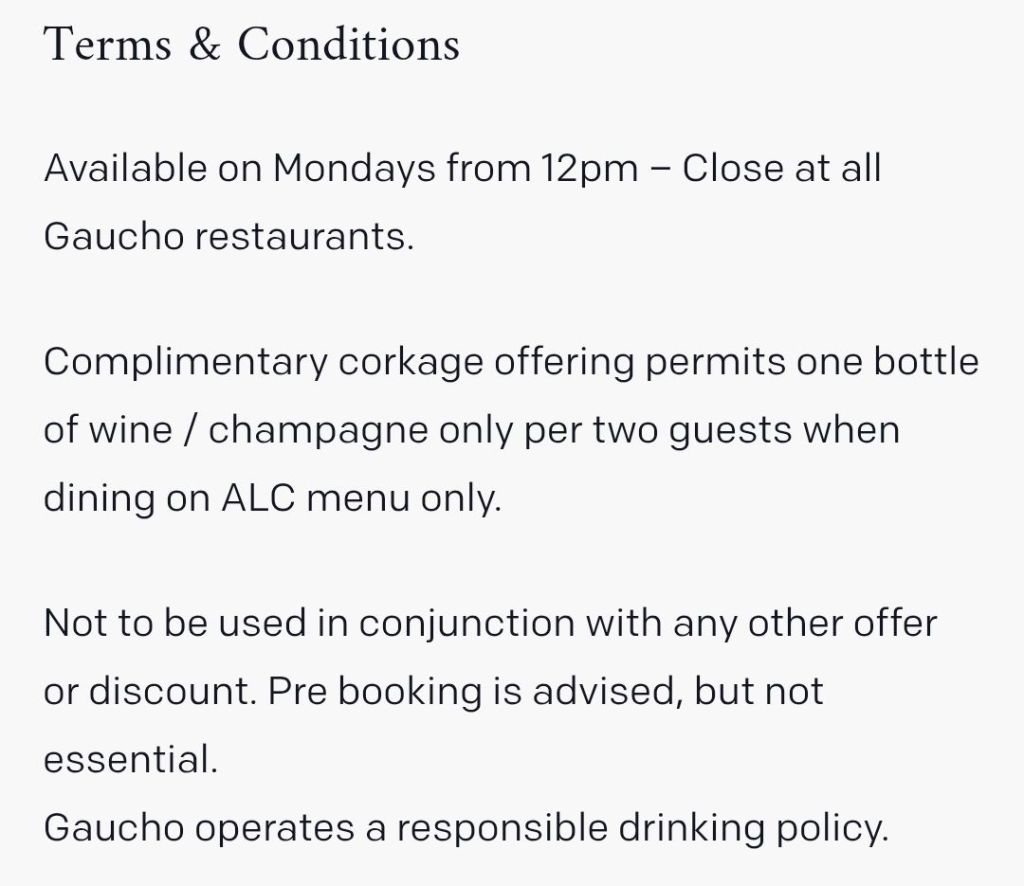
I mean either do it properly or don’t bother
We, at the Cardiff Wine Buyers Club, are always looking for places that do reasonable corkage so if you are a place that does it in the Cardiff or surrounds area or know of such a place please leave details in the comments.
Details
Address: 8-10 High Street, Cardiff, CF10 1BB
Website: https://pasturerestaurant.com/locations/pasture-cardiff/
 Soliciting Flavours